Greek Details: Naoussa and the vernacular: Houses, Craft, and Everyday Beauty
Northern Greece’s historic region of Makedonia offers one of the most atmospheric architectural landscapes in the Balkans - an intricate blend of architecture, local craftsmanship, mountainous climate, and centuries-old cultural habits. Walking through remnants of these settlements today, especially in the Naoussa-Edessa region, you encounter a distinctive vernacular tradition: stone-built ground floors, timber-framed upper levels, deep eaves, enclosed balconies, and intimate interiors shaped around hospitality and family life.
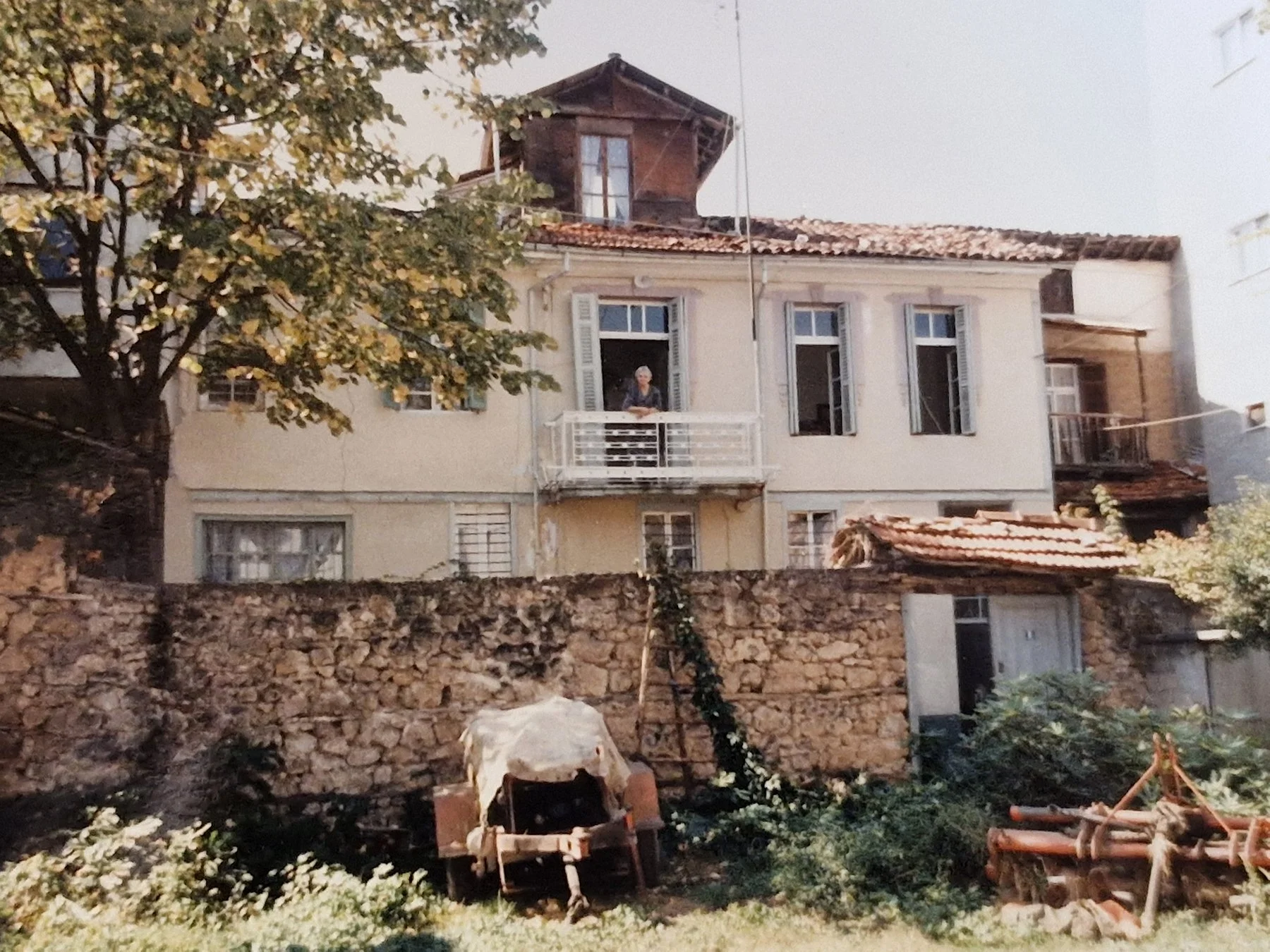
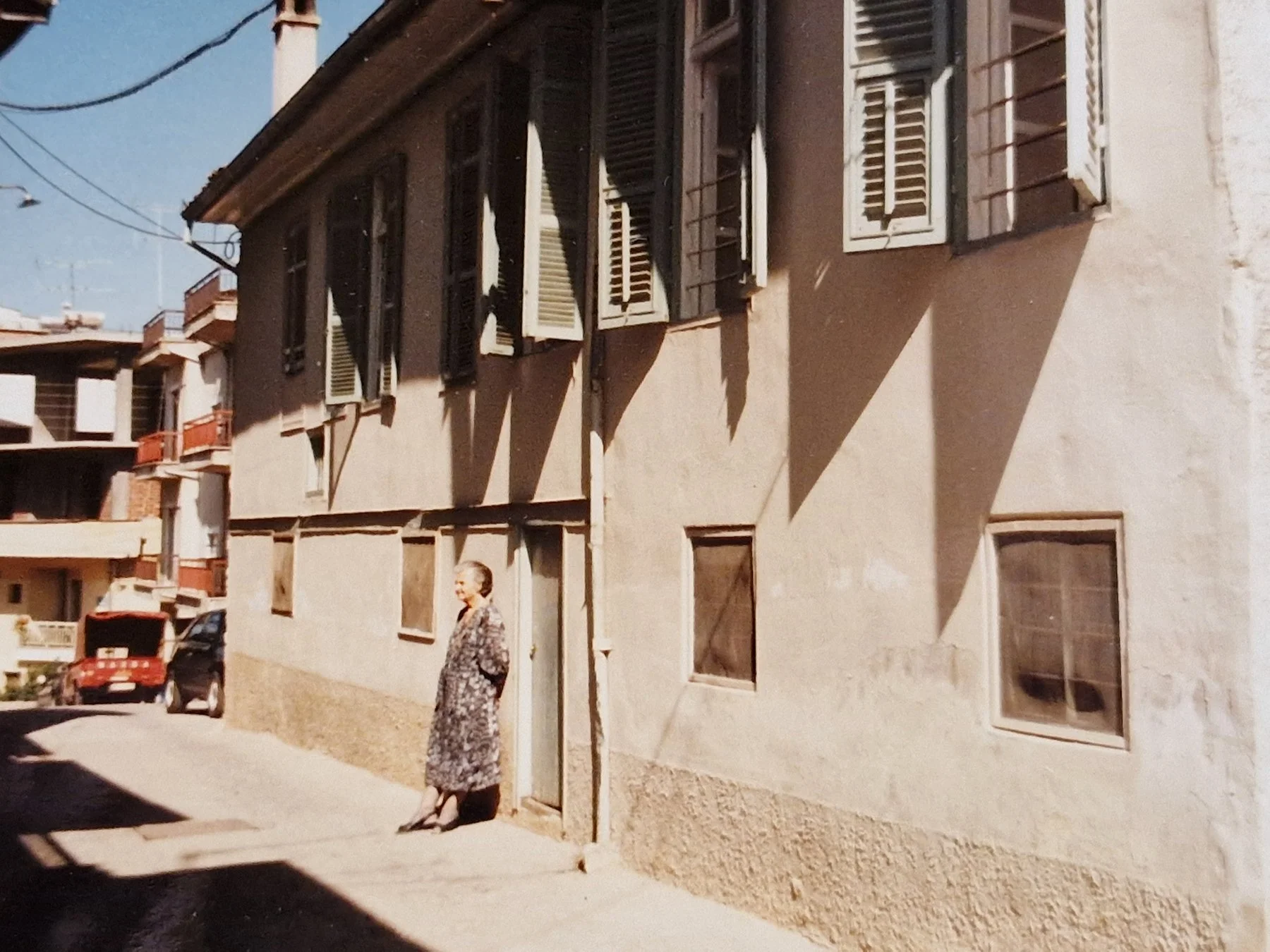
This post explores the characteristic house typologies, materials, spatial organisation, and interior details of the 19th century. For me, the most vivid expression of this architecture has always lived in Pouliana, the neighbourhood in Naoussa where I spent my childhood summers. Even now, I can still recall the feeling of my grandmother walking those uneven cobblestone paths as some houses leaned softly over the lanes like old friends whispering to one another. The balconies, the faint echo of running water somewhere in the distance, all of it formed a kind of living architecture lesson I didn’t yet know I was receiving. My grandmother’s house, with its quiet rhythm felt like the centre of a world where tradition wasn’t something preserved - it was simply lived. In Pouliana, the vernacular isn't an abstract concept; it is the texture of memory itself. It is the sound of a door creaking open, the flicker of light through wooden shutters, the sense that every space holds a story. Returning to it now, through research and reflection, feels like returning home.
The Urban Fabric: Narrow Alleys and Overhanging Floors
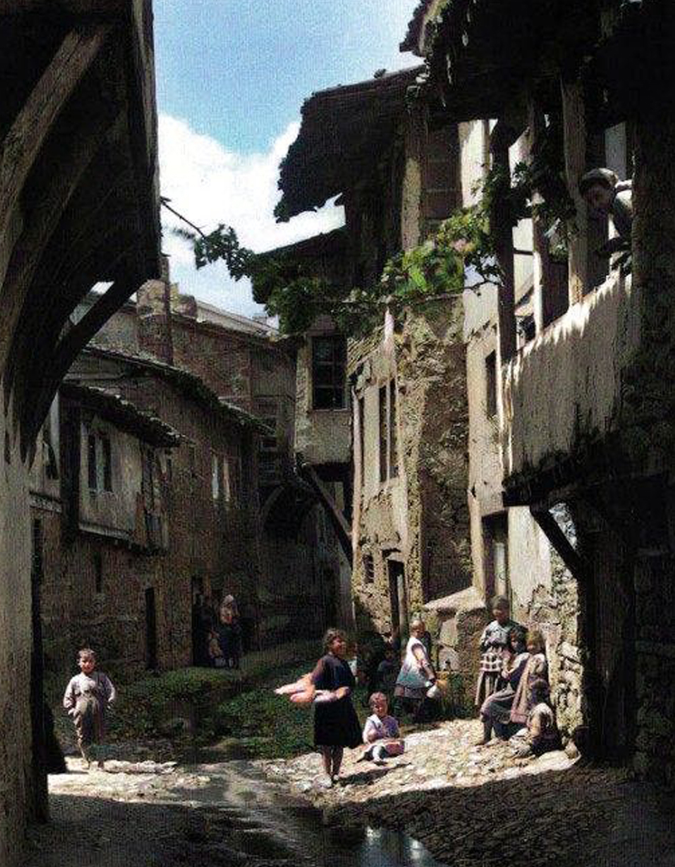
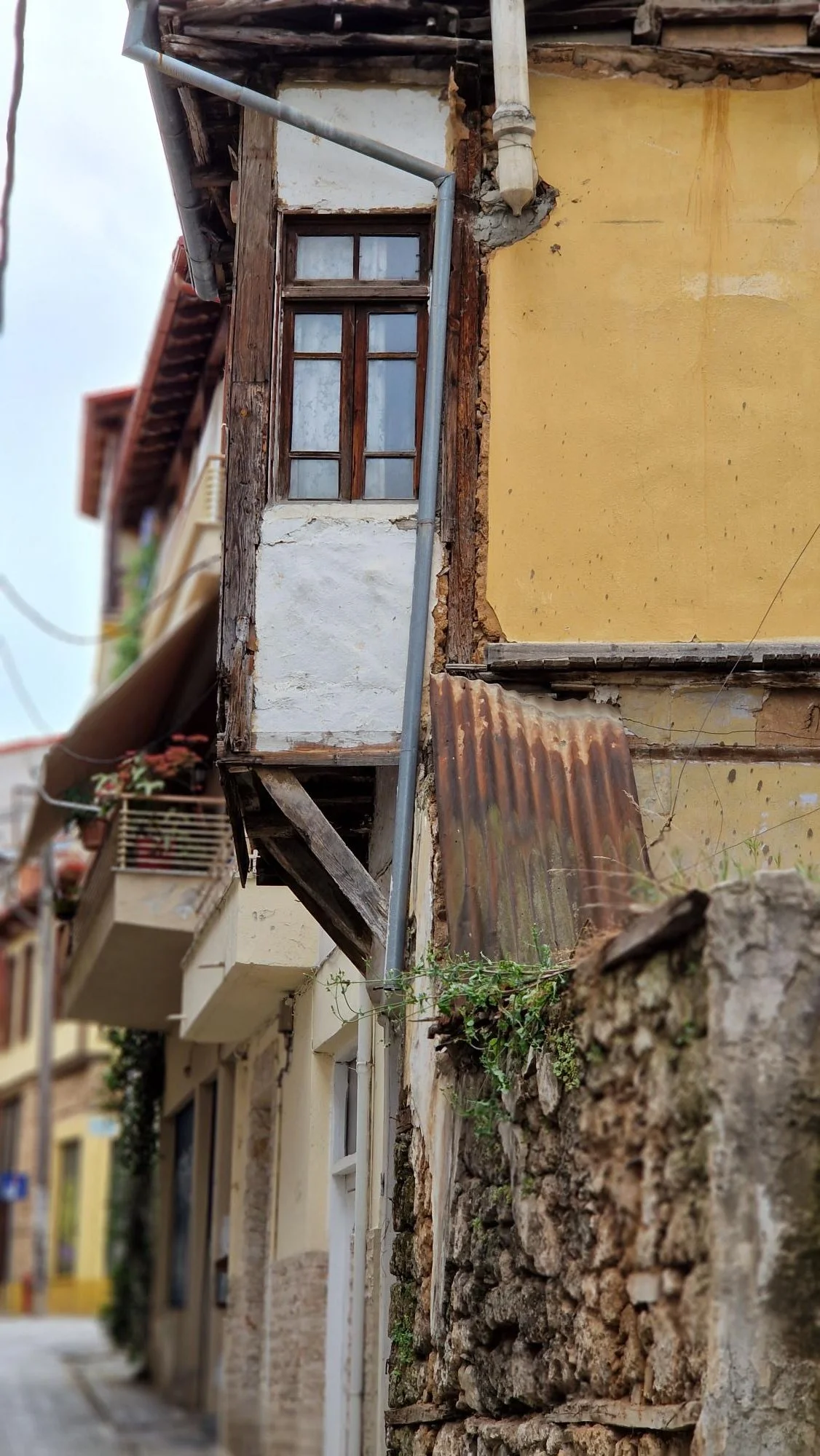
In many Macedonian towns, the streetscape was shaped by both topography and social life. Narrow lanes, cobblestone paths, and small waterways often wound between houses, especially in hillside settlements. The lanes appear almost tunnel‑like where projecting upper rooms - extend over the public way, creating shaded, intimate passages.
These neighbourhoods typically grew organically, without grand planning: houses adapted to the landscape, closing off to the street while opening to internal courtyards or upper-level views. The resulting townscape feels like a layered, almost sculptural environment.
The Makedonian House Typology
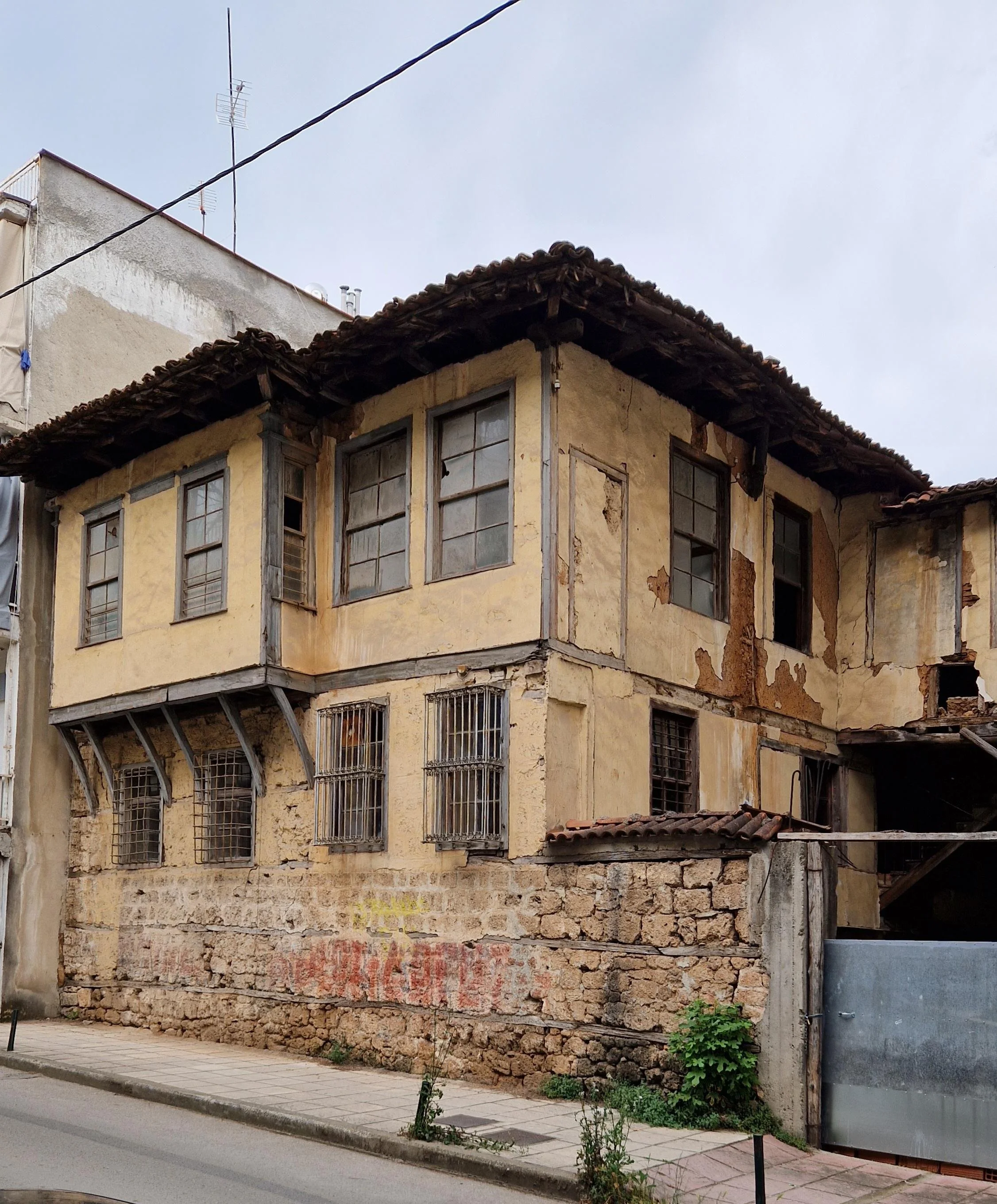
Stone Below, Timber Above
A defining feature is the mixed construction system:
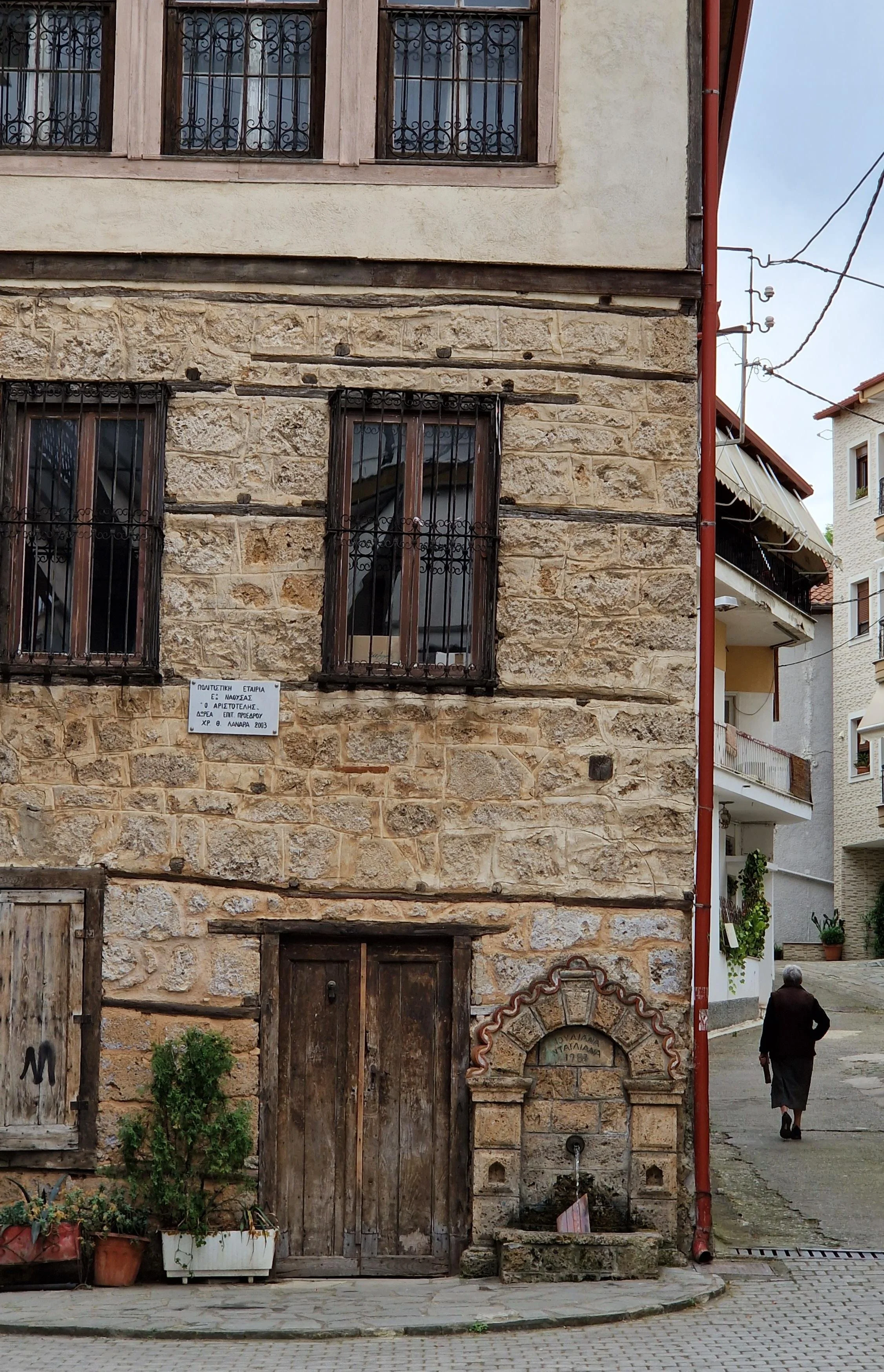
Ground floor: thick, load-bearing stone masonry, providing thermal mass and security. Windows were small and functional.
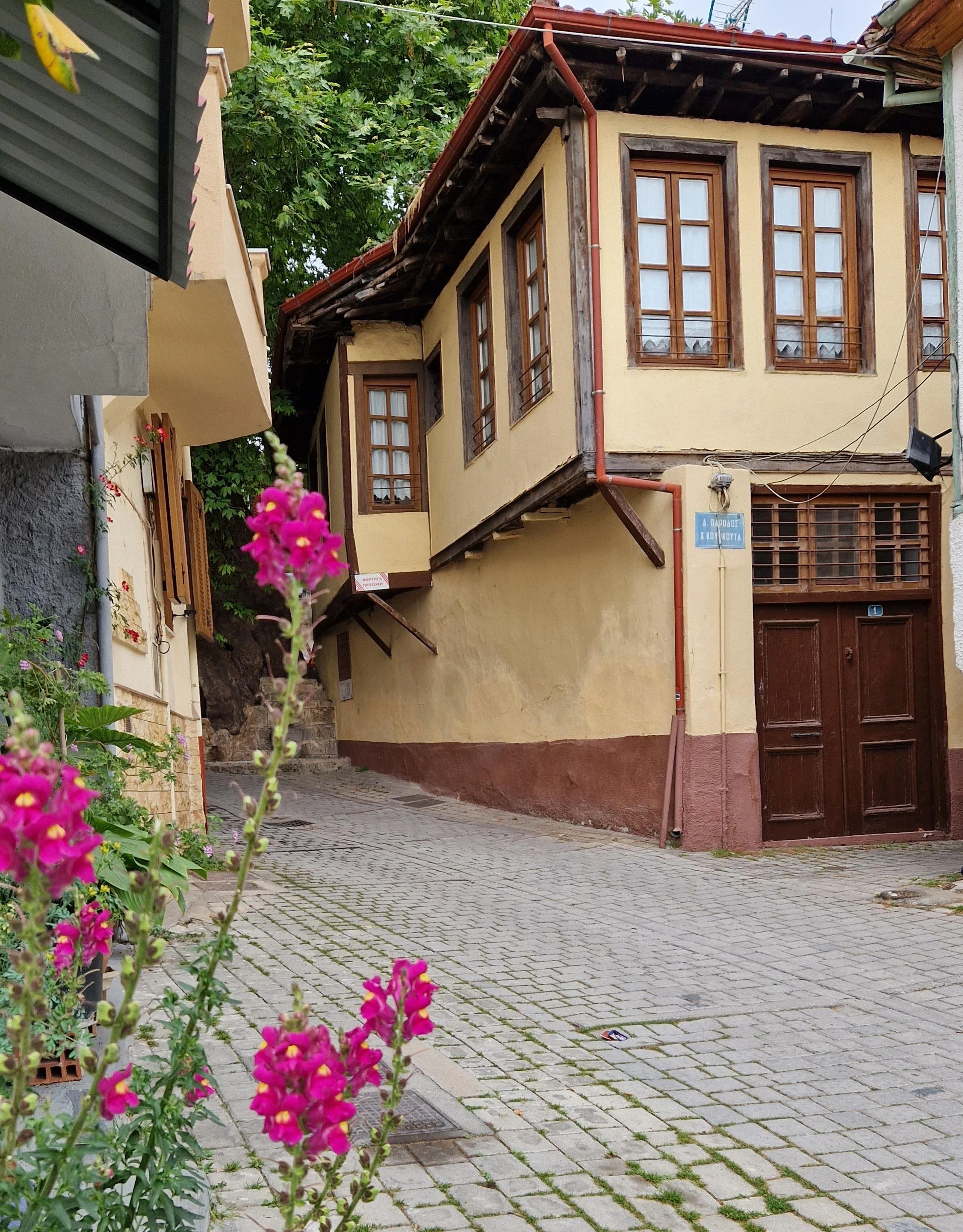
Upper floors: timber-framed (“μπαγδατί”) structures, filled with lighter clay-straw infill and coated with lime plaster. Larger windows, wooden shutters, and projecting balconies were common.
The “Tripartite” House Layout
Many 19th-century Makedonian houses follow a three-part vertical organisation:
Basement / Ground floor (“κατώι”)
Used for storage of wine, oil, produce, textiles, and tools.
Floors were often earth or stone.Main Living Floor (“ανώι”)
The heart of domestic life: reception, cooking, winter living, and everyday activities.
This level typically included:the odos or central hall,
doors to surrounding rooms,
and sometimes a hearth.
Upper Salon (“οντάς”)
The most refined space - often used for guests, celebrations, or seasonal sleeping.
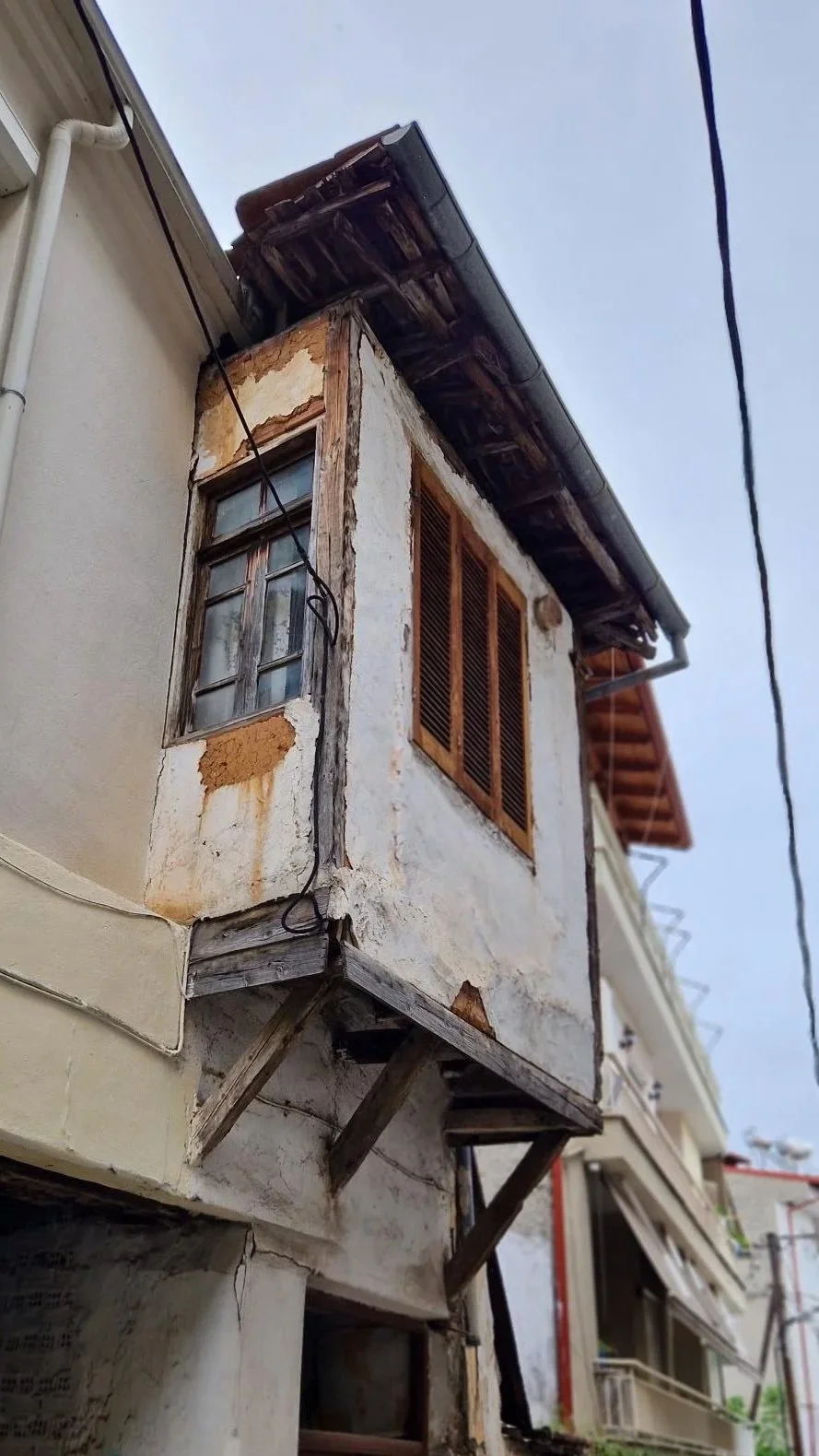
It was richly decorated, well-lit, and frequently projected outward as a sachnisi.
The Sachnisi
A signature element of Makedonian architecture, the sachnisi is an enclosed wooden balcony that:
enlarges the upper living space,
brings in light from three sides,
and offers views outward to the landscape or street.
Its underside is often scalloped or carved, adding decorative elegance to the façade.
Interiors: Warmth, Craftsmanship, and Everyday Simplicity
Inside these houses, the design reflects a world of textile richness, carved woodwork, and functional beauty.
Ceilings
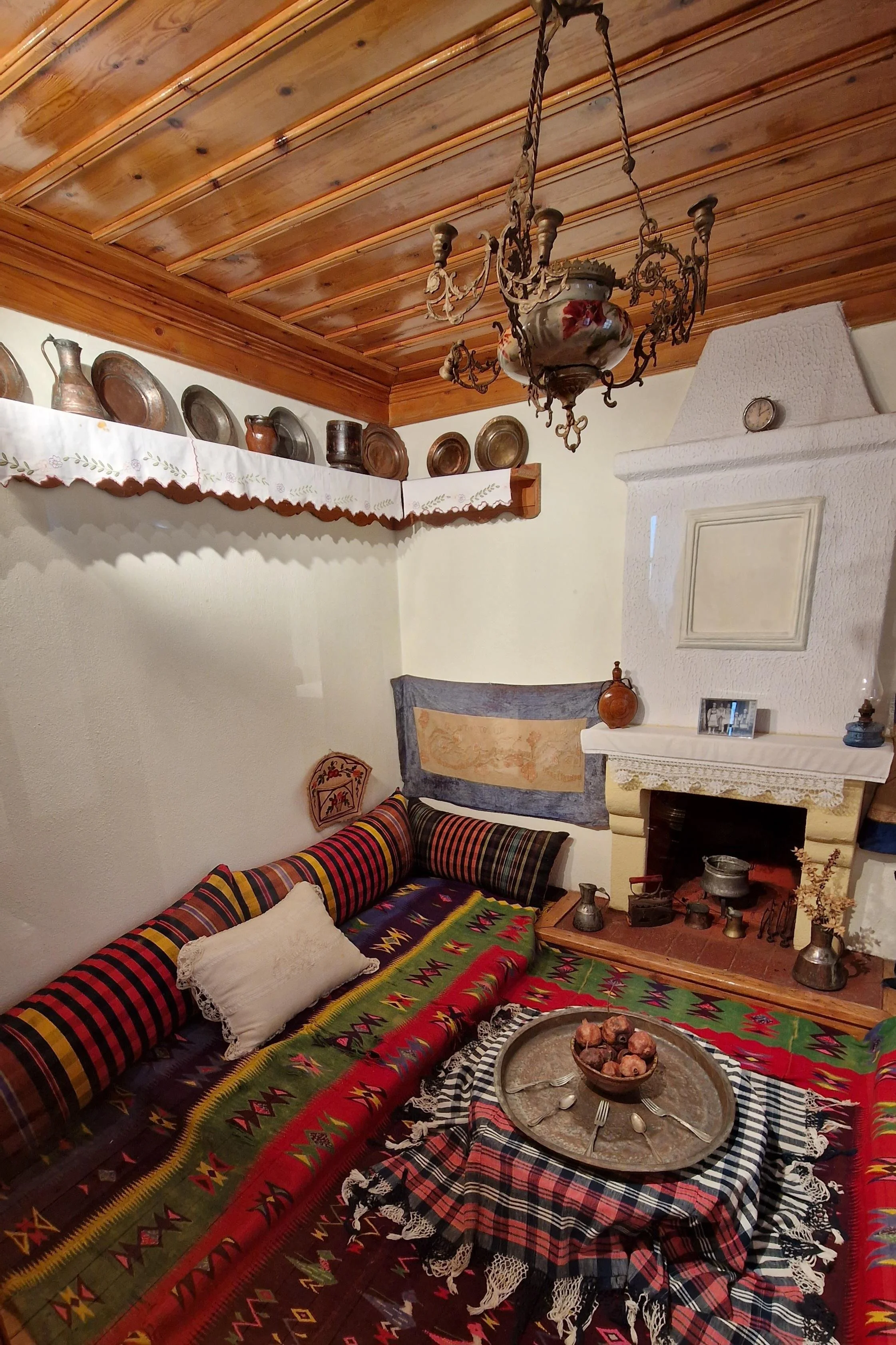
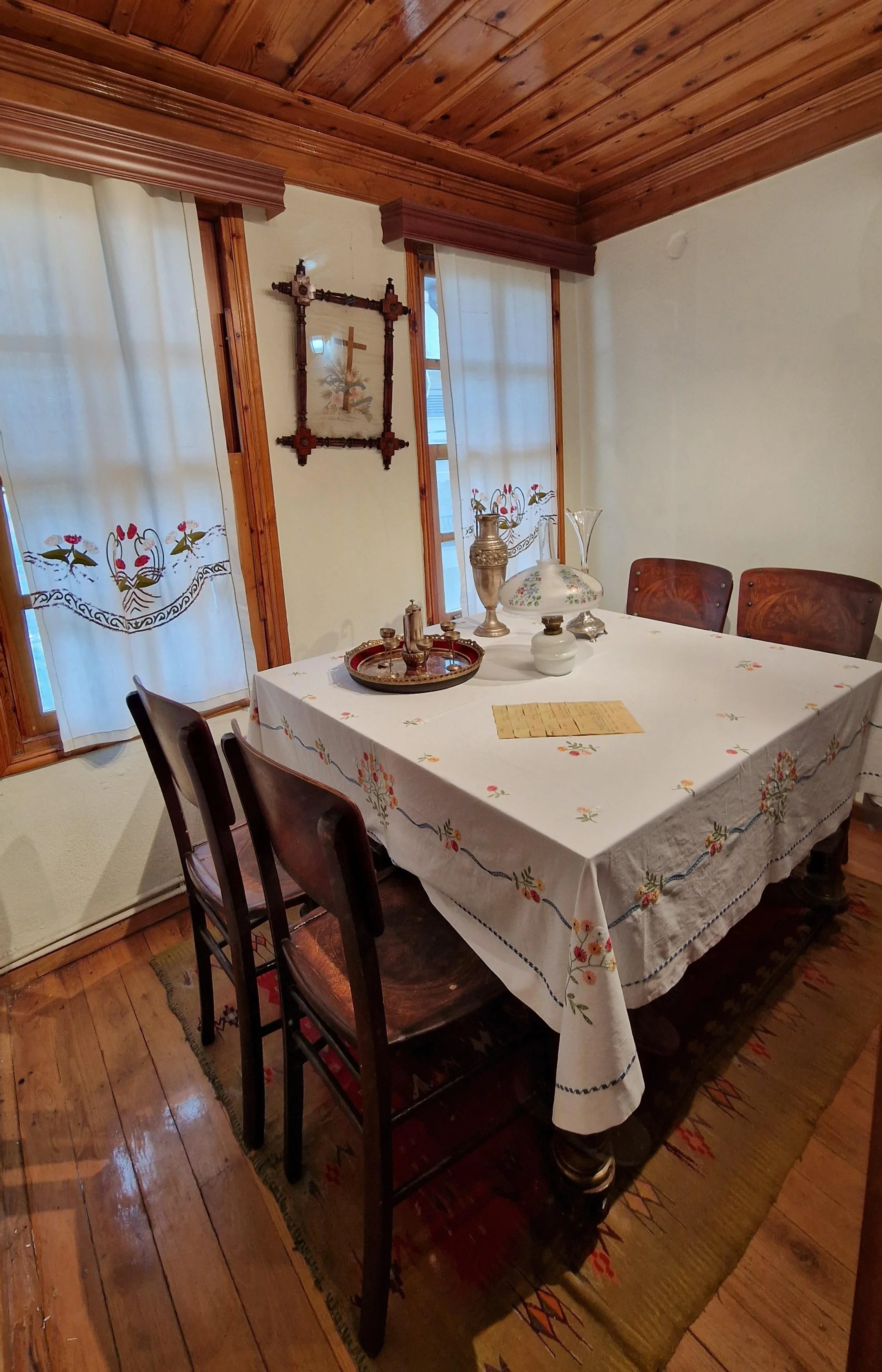
Polished wooden boards with exposed beams—warm in tone and subtly decorative.
In more prosperous homes, geometric patterns were created from finer carpentry.
The Fireplace (“τζάκι”)
A cornerstone of the interior:
shaped with a tall, triangular hood,
sometimes plastered smooth,
and often decorated with simple mouldings or a recessed niche.
The hearth wasn’t just functional; it structured family life during the long winters.
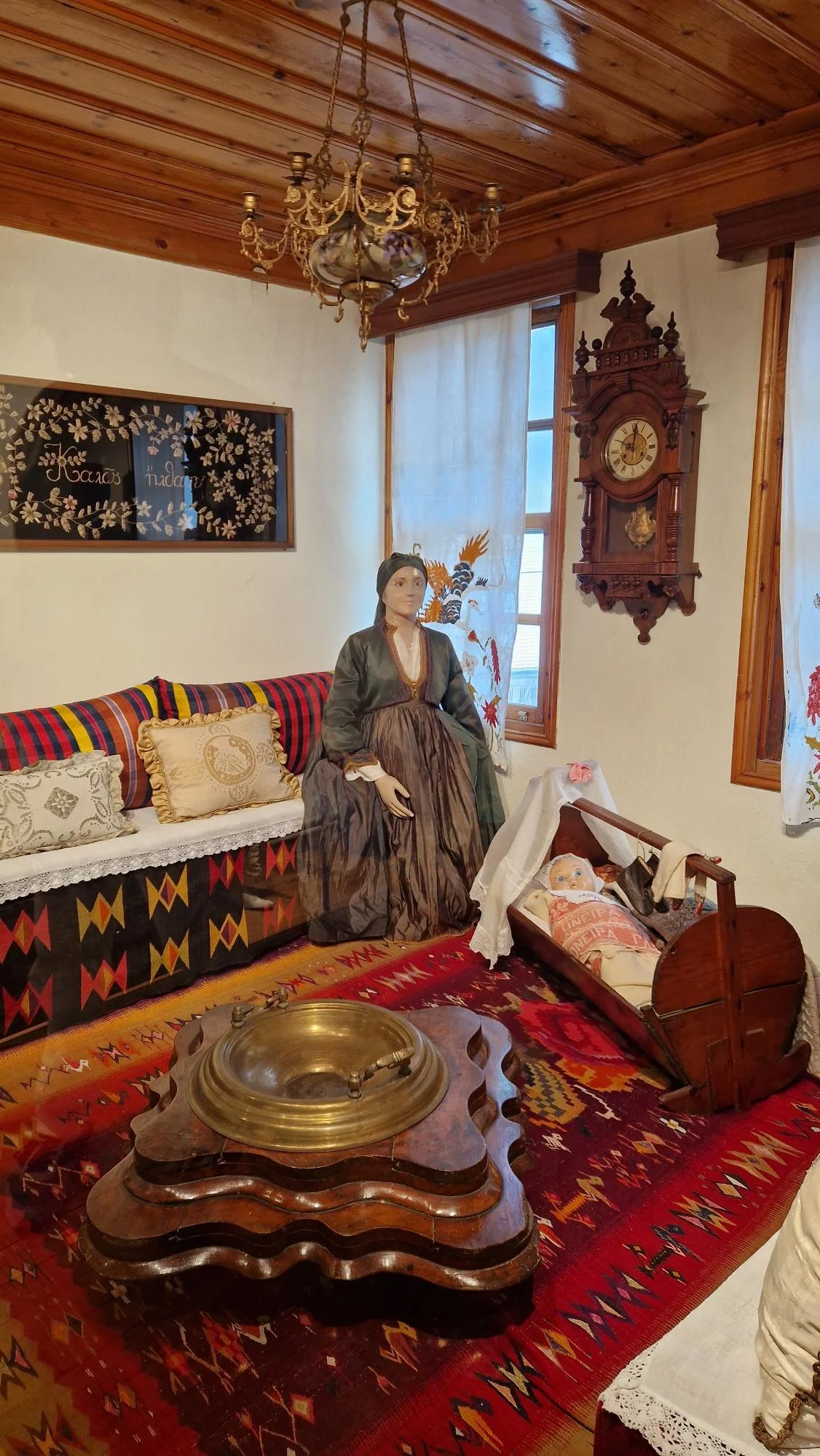
Built‑in Seating (“σοφράς” and “μπασιά”)
Low seating areas lined with textiles and cushions (as visible in your reference image) provided:
places for gathering,
shared meals around low round tables,
and sleeping arrangements when needed.
Textiles and Patterns
Northern Greek interiors were filled with:
kilims and flat-woven rugs in reds, greens, and geometric bands,
striped cushions and mattresses,
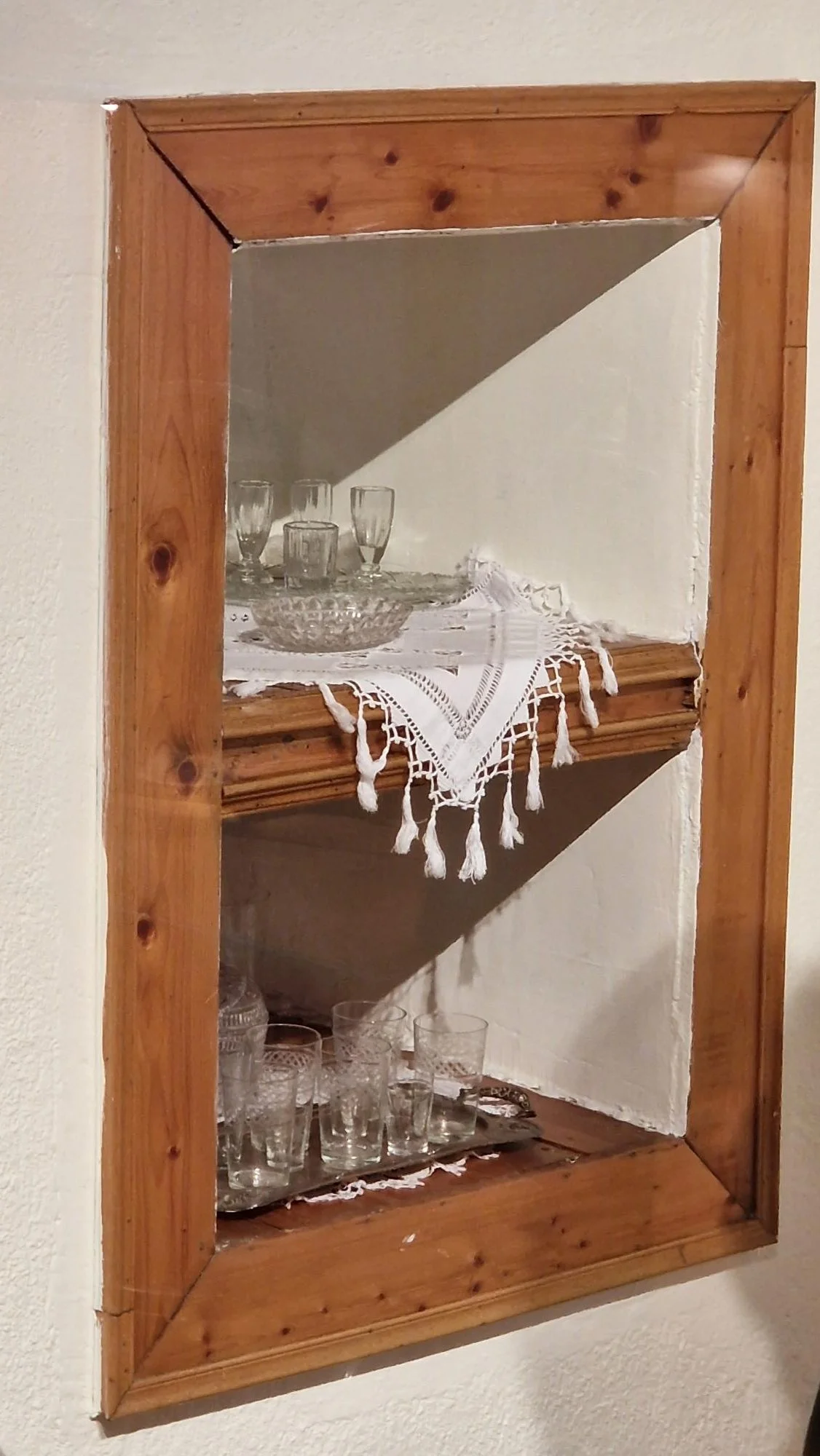
embroidered fabrics on shelves and wall edges.
A charming, consistent detail is the continuous wooden shelf running along the wall perimeter, displaying:
copper or brass utensils,
ceramic plates,
family heirlooms,
or everyday vessels.
This created a sense of layered domestic history.
(this blog is accompanied a selection of my photographs from Naoussa - fragments of viewpoints, architecture, ritual, interior spaces and family. They are documents of a place that continues to shape who I am)